Write a Creator Brief That Leaves Room for Good Ideas
Give creators a clear task without scripting every decision. Use a practical brief structure for objectives, deliverables, timelines, feedback, and usage.

A brief should make the work easier to discuss. If the creator cannot tell who the piece is for, what needs to be delivered, or which details are essential, a longer document will not necessarily help. Start with the decisions both sides need before production begins.
The structure below is an editorial planning template. Adapt it to the actual project and record the terms you agree together; it is not a substitute for your project agreement.
By the end of this article, you’ll be able to…
- Separate required facts and deliverables from creative choices.
- Agree the review process, scope, payment arrangements, and usage before production.
- Connect feedback to the brief and consolidate comments through one reviewer.
1. Define the audience and one primary objective
Describe the audience in terms relevant to the work: their situation, what they already know, and what question the content should answer. “Everyone who likes lifestyle content” gives a creator little direction. “People setting up a compact home workspace who want to see how the product fits on a desk” suggests a scene and an explanation.
Choose a primary objective such as introducing the product, demonstrating one use, or answering a recurring question. Decide how you will review that objective. If you plan to measure performance, agree which metric, reporting period, and source you will use; avoid treating a target as a guaranteed outcome.
2. Make the deliverables countable
List each item separately. Include the format, intended channel, approximate length or size where relevant, language, caption requirements, and delivery method. Distinguish a finished video from alternate cuts, stills, raw footage, or a post on the creator's own channel.
For a hypothetical desk-accessory project, the list might contain one demonstration video and one cover image. That does not automatically include additional edits or an advertising package. Write any extras down so both sides can assess the work before accepting it.
3. Separate facts from creative direction
Provide the verified product information the creator needs, together with a contact for questions. Identify essential wording or exclusions and explain why they matter. If a claim cannot be supported, resolve it before asking the creator to repeat it.
Then describe the creative space: the tone, the audience question, and any useful references. Explain what you like about a reference—such as the pace or clarity of a demonstration—without asking for a copy of another person's work.
4. Give the schedule a review path
Include dates for product arrival, concept review if needed, first delivery, feedback, and final handover. State the timezone. Leave realistic time between receiving a product and filming it, and agree how a delay changes the plan.
Name one person to consolidate feedback. Set the number and scope of review rounds, the response window, and how additional requests will be handled. Conflicting comments from several reviewers are easier to prevent than to reconcile in the final edit.
5. Agree the commercial and usage details
Before work starts, confirm the fee, what it covers, the payment process and timing, and any agreed expenses. Discuss where the finished content may appear, how long it may be used, whether paid promotion or editing by others is included, and how attribution will work.
These details should reflect the actual agreement. A product delivery, a tag in a post, or a reference to a previous project should not stand in for a clear conversation about the current scope.
A compact brief checklist
- Audience, main question, and primary objective.
- One line for each deliverable and any required variants.
- Verified product facts, essential points, and creative flexibility.
- Milestones, timezone, and a named review contact.
- Feedback rounds and the process for changes to scope.
- Agreed fee, payment arrangements, expenses, and usage.
- Open questions to resolve before either side starts.
Give feedback that helps someone act
Link each comment to the task. Instead of “Make it more exciting,” try “The opening does not yet show the desk setup; please bring that shot forward so the audience can identify the use case.” Separate a factual correction from a preference, and mark which changes are required.
Before sending your brief, ask someone outside the project to read it and name the deliverables, deadline, and main message. Wherever they have to guess is a useful place to clarify.
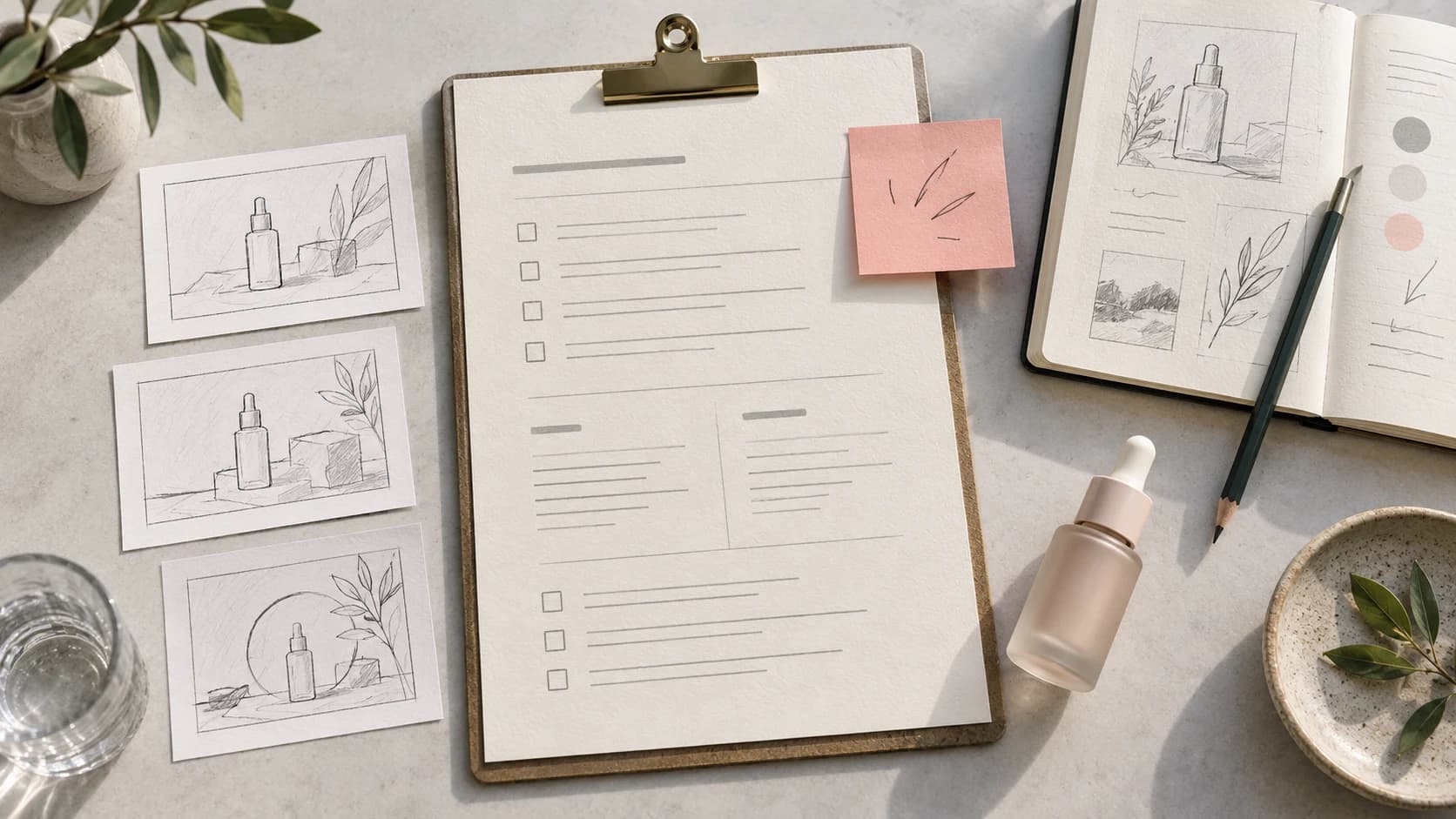
Cover: an AI-generated editorial image for Unbok. Objects and scenes are illustrative.