During Floods, How Should Shops Pack and Ship Orders?
Check the route, protect the product, and explain delays clearly. A practical shop checklist with a customer message you can adapt.

When flooding disrupts deliveries, customers need two things from a shop: an order that has been handled with care, and a clear explanation of what happens next. Extra packaging helps with rain exposure, but it cannot reopen a blocked route or make travel through floodwater safe.
Start with this rule: check whether the order can travel safely before deciding how to pack it. This is a preparation guide, not a live list of affected areas. Check current local warnings and your carrier's service notices for every dispatch day.
By the end of this article, you’ll be able to…
- Confirm service and safe access before choosing to send or hold an order.
- Match protective layers to the goods and keep labels scannable; rain protection does not mean safe immersion.
- Share the confirmed order status, realistic options, and a clear next-update time.
1. Decide whether to send, hold, or contact the customer
Confirm that the carrier is accepting parcels from your pickup location and delivering to the recipient's exact postcode and area. Ask the customer whether someone can receive the order safely. A parcel accepted at the counter is not proof that the final delivery route is open.
- Send: service is available, the handover is safe, and the product can tolerate the expected journey.
- Hold: service is suspended, access is unsafe, or delays could compromise the product.
- Agree another arrangement: discuss a later dispatch or an alternative address or collection point that both the customer and carrier can use safely.
Do not ask staff, riders, or customers to walk or drive through floodwater to complete an order. Follow local emergency instructions; CDC floodwater guidance explains the danger.
2. Pack in layers, starting with dry goods
Use a clean, dry packing station and keep stock and completed parcels off the floor. Separate any flood-exposed stock from goods ready to ship.
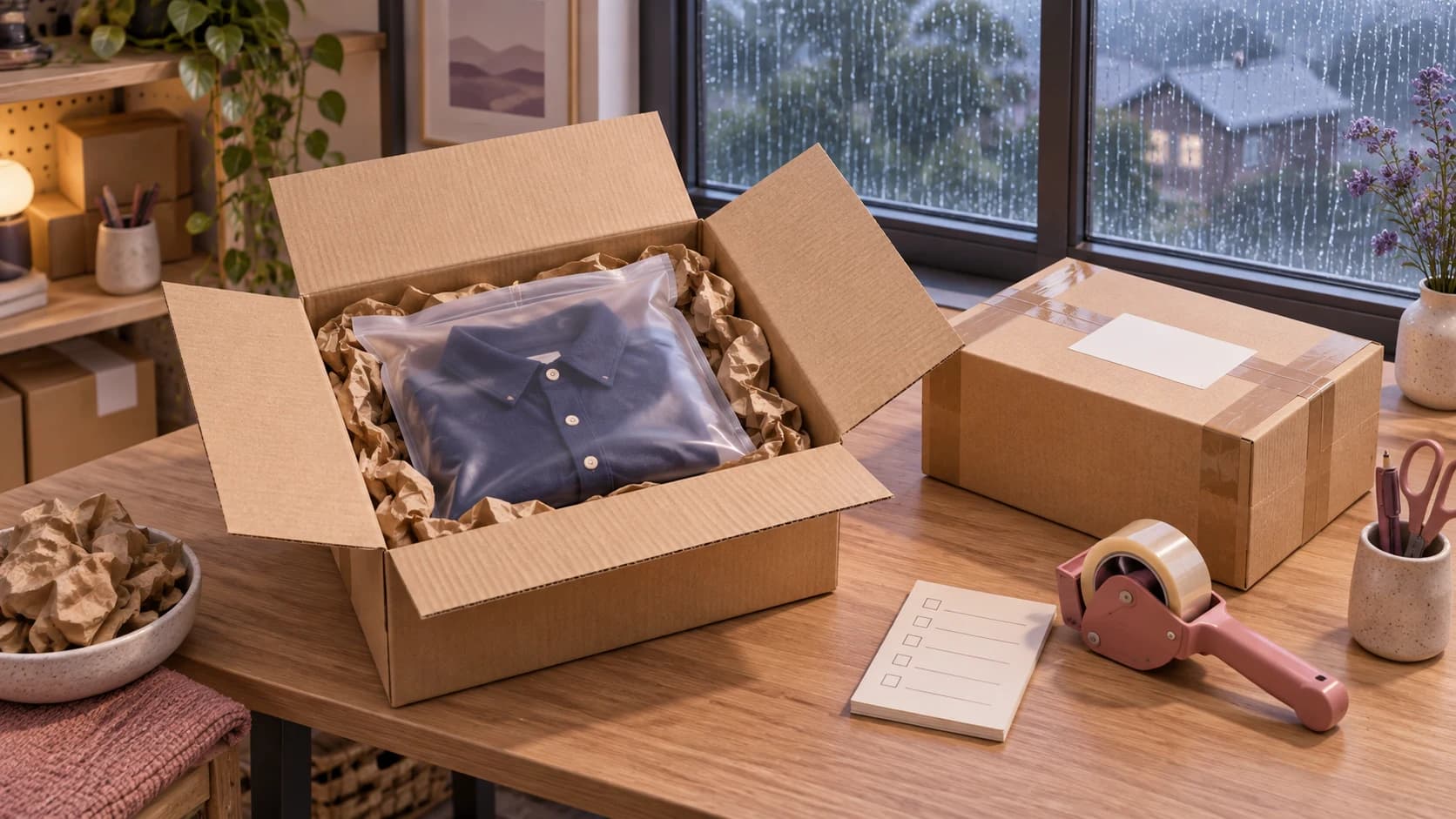
- Protect the product: for suitable dry goods such as clothing, use a well-sealed protective inner bag. Check the closure and avoid trapping a damp product inside. This adds rain protection; it does not make the parcel safe to immerse. DHL's weather-protection guide discusses inner packaging.
- Cushion and contain: choose a sound box suited to the weight and fragility. Wrap fragile pieces separately and fill gaps so they cannot collide or move freely. Follow the product and carrier's requirements for cushioning. See the DHL packaging guide.
- Seal the carton: use suitable parcel tape across the centre seam and both edge seams on the top and bottom, forming an H. Follow your carrier's tape and outer-wrapping rules. More external plastic is not automatically acceptable; FedEx, for example, restricts outer wrapping on standard parcels. See its packing guidelines.
3. Keep the label readable
Place the label flat, clear of seams and corners. Use weather-resistant labels or a document pouch only as allowed by your carrier. Avoid tape over the barcode; reflections can interfere with scanning. Put a spare delivery-information sheet inside, and remove obsolete labels from a reused box. Keep customer addresses out of public packing photos.
4. Give sensitive products a separate decision
- Chilled or perishable goods: send only with a suitable temperature-controlled service and packaging that can maintain the required conditions for the journey. If disruption makes that uncertain, pause dispatch.
- Food exposed to floodwater: do not simply dry the package and send it. Isolate affected stock and follow official food-safety guidance. Unsafe food can look and smell normal. See CDC advice after floods and power outages.
- Electronics, batteries, liquids, and fragile goods: follow the manufacturer's and carrier's specific packing and acceptance rules. A general rain-protection layer does not replace those requirements.
5. Tell customers what you know and when you will update them
Separate dispatch from arrival. Say whether the parcel is still with your shop, has been handed to the carrier, or is delayed in transit. Share a delivery estimate only when it has a reliable basis. If there is no confirmed date, give a time for the next update instead.
Message template — replace the brackets with verified details:
Hello [customer name]. Flooding is affecting delivery to [area]. Your order [order number] is currently [confirmed status]. We can offer [available options]. Please tell us which option works for you. We will update you by [date, 15:00 Thailand time], even if the carrier has not confirmed an arrival date. Thank you for your patience.
Offer only arrangements your shop can fulfil, such as holding the order, an agreed alternative destination, or cancellation and refund assistance where available. Confirm changes before dispatch. Avoid promising that extra wrapping guarantees an undamaged or on-time delivery.
6. Keep a simple dispatch record
Record the order number, packing date, condition of the goods, carrier handover, and tracking number. If safe, keep clear photos of the packed item and sealed carton for your records. Track delayed orders in one list and assign someone to send the promised updates.
If a customer reports water damage, ask them to avoid unsafe handling and contact the shop. Request photos only when safe; do not ask them to plug in wet electronics or taste suspect food. Check the carrier's claim process promptly while helping the customer with the order.
A quick check before handover
- Today's route and service availability checked?
- Customer able to receive safely?
- Goods dry, suitable to ship, and protected for their specific needs?
- Box secure, label readable, tracking recorded?
- Customer told the actual status and next update time?
A well-run flood response combines careful packing with realistic promises. When safe delivery is uncertain, a clear hold-and-update plan is a useful service in itself.
Sources checked 4 October 2026. Carrier rules and service availability vary; confirm the rules for the service you use. Cover: an original AI-generated editorial illustration for Unbok.